
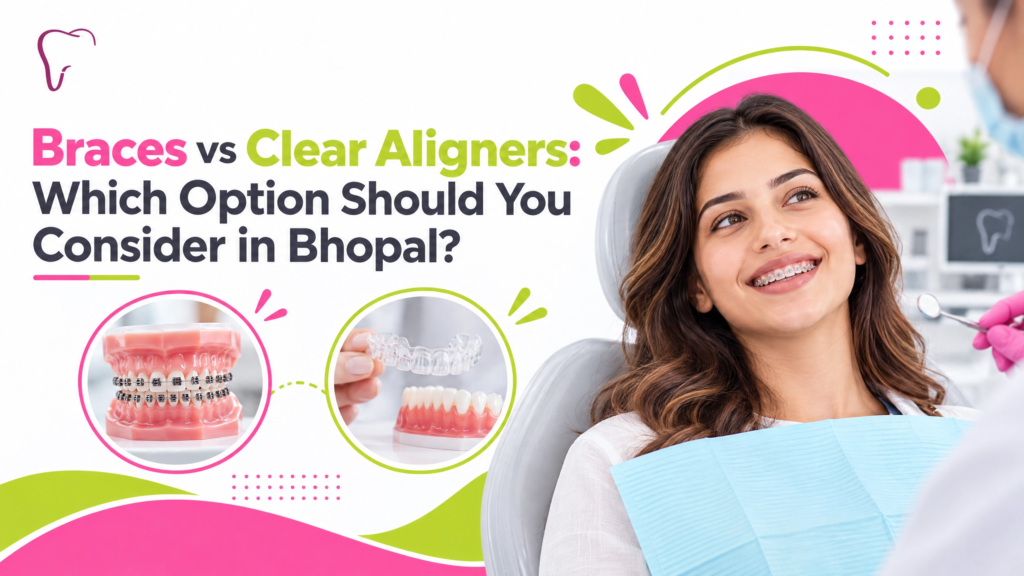
Most people who start researching orthodontic treatment in Bhopal arrive with the same question. Should I get braces, or are clear aligners the smarter choice? The internet rarely settles it. One page calls aligners the modern option, and the next insists braces are more reliable.
Both claims hold some truth, which is why the answer depends on you. Your bite, routine and budget each push the decision in a particular direction.
Same Goal, Two Very Different Tools
Both move teeth with steady, controlled pressure. The difference is how that pressure is delivered.
Braces use small brackets bonded to each tooth, linked by a wire your orthodontist adjusts at regular visits. They come in metal or tooth-coloured ceramic, and they stay fixed until treatment ends.
Clear aligners are thin, transparent trays made from a digital scan of your mouth. Each new set nudges your teeth a little further, and you take them out to eat and brush.
Where Each Option Earns Its Place
The real debate around braces vs clear aligners isn’t about which is better overall. It’s about which suits your mouth.
When braces make more sense
Braces give the orthodontist fixed, precise control over every tooth. That control matters for severe crowding, badly rotated teeth, large gaps and significant bite problems. For complex cases like these, braces treatment remains the most dependable route, and it’s typically the more affordable one too.
They also suit teenagers who might forget their aligners. Braces can’t be left on the bedside table.
When aligners fit better
Mild to moderate crowding, small gaps and minor relapse after earlier treatment respond well to aligners. Working professionals prefer them because they’re hard to spot in meetings or photos. When patients ask about invisible braces, this is usually what they mean.
There’s a catch, though. Aligners only work while you’re wearing them, which means 20 to 22 hours a day. If they’d end up in a drawer, braces are the faster route.
Comfort, Cleaning and Cost: The Practical Side
Aligners feel smoother against the cheeks, and because you remove them before meals, no foods are off limits.
Braces ask for more effort. Cleaning around brackets takes longer, and hard or sticky foods are best avoided.
Cost depends on case complexity and the system used. As a rule, clear aligners cost more than conventional metal braces. An accurate quote needs a proper examination.
The Right Orthodontic Treatment in Bhopal Starts With a Diagnosis
A comparison chart can’t make this call. An experienced orthodontist can tell you in one consultation whether aligners will achieve the result you want or whether braces are needed. Some plans even combine the two.
At Confi Dental Smile Clinic in Chitragupt Nagar, Kotra Sultanabad, consultations include a digital intraoral scan, so you see your teeth in 3D. Dr. Kunal Agarwal holds an MDS in Orthodontics and is a certified Invisalign and Flash aligners provider. With metal, ceramic and clear options under one roof, the advice follows your case, not a favourite system.
Your Smile, Your Call
There’s no universal winner. Braces offer control and value for complex cases, while aligners offer discretion and comfort for people who’ll wear them consistently. The best orthodontic treatment is the one matched to your bite and your daily life.
Book a consultation with Dr. Kunal Agarwal at Confi Dental Smile Clinic to find out which option fits you.
FAQs
Are clear aligners as effective as braces?
For mild to moderate crowding and spacing, aligners deliver results comparable to braces when worn as directed. Severe rotations, large bite discrepancies and complex tooth movements are still handled more predictably by fixed braces, which give the orthodontist greater control.
How long does treatment take?
Treatment time depends on how far your teeth need to move, not just the appliance. Aligner cases typically take 6 to 18 months, and complex bite corrections with braces can take longer. Your orthodontist confirms an estimate after examining you.
Do aligners hurt less than braces?
Both cause mild pressure for a day or two after each adjustment or new tray. Aligners have no brackets or wires, so they rarely rub the cheeks. Braces can cause minor soreness at first, which orthodontic wax usually eases quickly.
Can I eat normally during treatment?
With aligners, yes. You remove them before eating, then brush and put them back. With braces, you can eat most foods, but hard, sticky and chewy items such as nuts, toffee and corn on the cob risk breaking the brackets.
Am I too old for braces or aligners?
No. Healthy teeth and gums can be moved at any adult age, and many working adults choose aligners because they’re discreet at work. Your orthodontist checks your gum and bone health first to confirm that treatment is safe for you.