Dental impressions have traditionally involved placing impression material and a tray inside the mouth. While this method remains useful in many situations, digital technology now offers dentists another way to capture highly detailed images of the teeth and oral structures.
Digital Dental Scanning Bhopal can make the impression process quicker and more comfortable while giving dentists a detailed digital model for treatment planning. From restorative procedures to orthodontic assessments, digital scans can improve communication between the dentist, laboratory and patient.
But how does this technology actually work, and what makes it different from conventional impressions?
How Digital Dental Scans Improve Diagnosis and Treatment Planning
Digital dental scans create a detailed three-dimensional representation of the teeth and surrounding oral structures without requiring conventional impression material. The resulting digital model can support accurate treatment planning, documentation and communication with dental laboratories.
This combination of precision, speed and patient comfort makes digital scanning a valuable part of modern dentistry.
What Is Digital Dental Scanning?
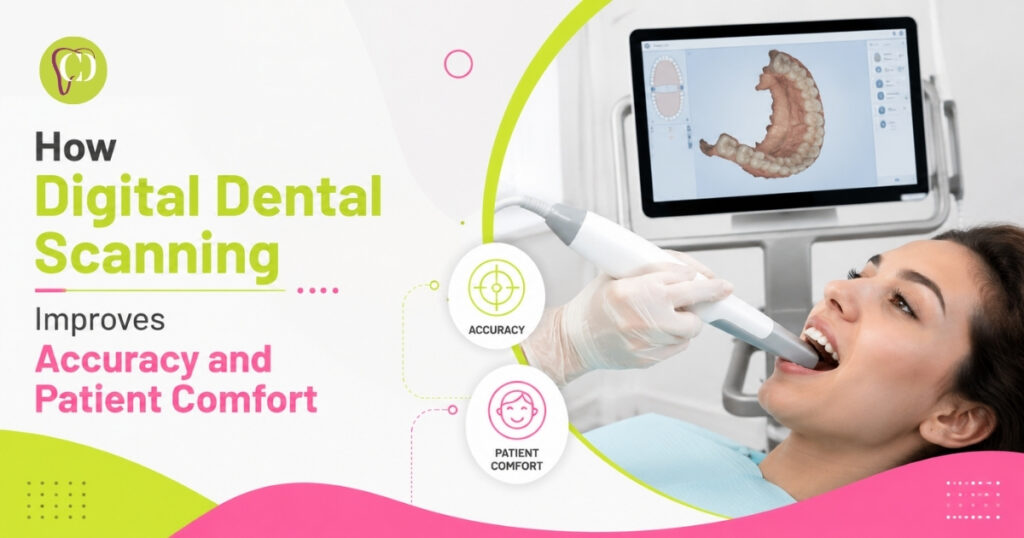
Digital dental scanning uses an optical device to capture multiple images of the teeth and combine them into a three-dimensional digital model. Instead of taking a physical mould, the dentist moves a handheld intraoral scanner around the relevant areas of the mouth.
The scanner captures detailed surface information that can be viewed on a computer. Dentists can then assess the digital model, identify areas requiring attention and use the data for suitable treatments.
Digital impressions can also be stored electronically, making it easier to access the information during future appointments when clinically appropriate.
How Does an Intraoral Scanner Work?
An intraoral scanner uses optical technology to capture images as the scanner tip moves over the teeth. Software processes these images and builds a digital representation of the dental arches.
The dentist can view the scan on a screen during the appointment. If an area is incomplete or unclear, it can often be rescanned immediately rather than repeating an entire physical impression.
This immediate visual feedback can help dentists identify missing data and improve the quality of the digital impression before proceeding with treatment planning.
Why 3D Dental Scanning Can Be More Comfortable
One of the biggest advantages of 3d dental scanning is that it avoids the need for impression trays and traditional impression material in cases where a digital impression is appropriate.
For patients with a sensitive gag reflex, this can make the impression-taking process considerably easier. The scanning process is also generally quick, although the duration depends on the area being scanned and the complexity of the case.
Patients can usually sit comfortably while the dentist moves the scanner around the mouth.
How Digital Scanning Improves Dental Accuracy
A digital impression can provide detailed information about tooth surfaces and spatial relationships. Because the scan appears on screen, dentists can review the captured data before sending it for laboratory or treatment-planning purposes.
Digital workflows may also reduce certain sources of distortion associated with physical impressions, although scan accuracy depends on the equipment, scanning technique, clinical conditions and operator experience.
A modern dental scanner therefore supports precision, but it does not replace the dentist’s clinical judgement. The scan is one part of a broader examination and treatment-planning process.
Digital Impressions vs Traditional Dental Impressions
Traditional impressions remain clinically useful and are still appropriate for certain treatments and situations. However, digital impressions offer practical advantages, including electronic storage, immediate visualisation and easier digital communication with dental laboratories.
Digital scanning can also make it easier to identify areas that need rescanning before the patient leaves the clinic. With physical impressions, problems may sometimes become apparent later during laboratory processing.
The most appropriate impression method depends on the treatment, patient and clinical circumstances.
Is Digital Scanning Suitable for Every Patient?
Digital scanning is suitable for many routine dental applications, but it is not automatically the best option for every case. Factors such as saliva, restricted access, tooth positioning and the complexity of the treatment can influence scanning.
The dentist will determine whether a digital impression provides sufficient information for the planned procedure. In some situations, conventional impressions or additional diagnostic records may still be required.
Patients should therefore view digital scanning as an advanced diagnostic and treatment-planning tool rather than a universal replacement for every dental technique.
How Digital Scanning Supports Modern Dental Treatments
Digital impressions can support several dental workflows, including crowns, bridges, orthodontic appliances, restorations and selected implant-related procedures. They can also help dentists communicate treatment information more clearly with dental laboratories.
Some clinics use systems such as an iTero dental scanner for digital impressions and visualisation. The specific scanner used depends on the clinic, treatment requirements and available digital workflow.
The main benefit is the ability to capture and transfer dental information digitally with greater convenience.
What Patients Can Expect During a Digital Scan
During the appointment, the dentist or trained dental professional gently moves the scanner inside the mouth while it captures images. The process does not involve X-rays, as intraoral scanning uses optical imaging rather than ionising radiation.
The digital model is built progressively on the screen. Depending on the treatment, the dentist may use the completed scan to discuss findings, plan the next stage or send the digital file to a dental laboratory.
Final Thoughts
Digital scanning is changing the way dentists capture impressions by combining detailed imaging with a more streamlined patient experience. It can reduce the discomfort associated with conventional impressions while allowing dentists to review digital information immediately.
For patients considering Digital Dental Scanning Bhopal, choosing a clinic with appropriate equipment and trained professionals is important. Confi Dental Smile Clinic can help patients understand whether digital scanning is appropriate for their specific dental treatment and how it can support accurate planning.
FAQs
1. Is digital dental scanning painful?
No. Digital scanning is generally non-invasive and does not require impression material. A handheld scanner is moved around the mouth to capture images of the teeth. Patients may experience minor awareness of the scanner, but the process is typically comfortable and does not involve needles.
2. How long does a digital dental scan take?
The scanning time depends on the number of teeth being captured, the treatment and the patient’s individual circumstances. Many routine scans can be completed relatively quickly. Digital Dental Scanning Bhopal may also reduce appointment time by allowing dentists to review digital impressions immediately.
3. Is an intraoral scanner better than traditional impressions?
An intraoral scanner offers several practical advantages, including immediate visualisation, digital storage and improved patient comfort for many people. However, conventional impressions remain useful for certain clinical situations. The dentist should select the technique based on the treatment requirements, accuracy needed and individual patient factors.
4. Does digital scanning use radiation?
No. Intraoral digital scanning uses optical imaging technology rather than X-rays. Therefore, the scanning process itself does not expose patients to ionising radiation. However, dentists may recommend separate dental X-rays when necessary because radiographs provide different diagnostic information that optical scans cannot provide.
5. What is 3D dental scanning used for?
3d dental scanning can create digital models used for treatment planning, orthodontic appliances, crowns, bridges and selected restorative or implant workflows. It can also help dentists communicate digitally with laboratories. Its suitability depends on the clinical procedure, scanning conditions and the dentist’s assessment.