
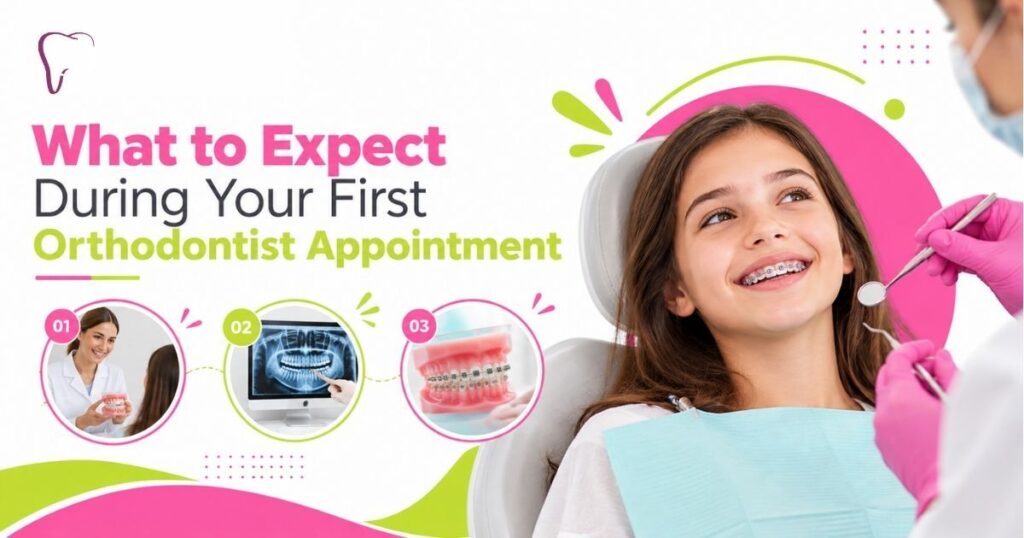
Most people walk into their first orthodontist appointment half expecting to leave with braces. You won’t. The first visit is a conversation and a careful look at your teeth, jaws and bite. Nothing gets fitted that day.
Knowing that alone takes the edge off. Here’s how the visit actually unfolds, so you arrive prepared and leave with real answers.
Start With Your Story, Not the Scan
The visit opens with a chat. Your orthodontist wants to know what bothers you, whether it’s a crowded front tooth, a gap that has widened over the years or a bite that makes chewing on one side uncomfortable.
Be specific. “I want straighter teeth” tells an orthodontist far less than “my lower front teeth overlap, and it’s getting worse.” Concerns about teeth alignment are much easier to assess when you can point to exactly what changed and when.
You’ll also be asked about your medical history, any medicines you take and past dental work. Bring recent X-rays if you have them. Parents should mention habits such as thumb sucking or mouth breathing, because these details shape the plan.
The Examination: Teeth, Jaws and Everything Between
This part of the orthodontic consultation is hands-on but painless. Your orthodontist checks how your upper and lower teeth meet, how your jaw moves as you open and close, and whether there’s enough room for every tooth.
Your face matters too. Lip position, jaw symmetry and your side profile reveal a lot about the bones underneath, not just the teeth sitting on them.
Records That Map Your Smile
Records come next. Expect photographs and X-rays, which show roots, unerupted teeth and jaw structure that no visual check can catch. At Confi Dental Smile Clinic, digital intraoral scanning replaces the gooey impression trays many patients still dread. A small handheld wand builds a 3D model of your teeth instead.
Mapping Out Your Treatment Options
With the findings in front of you, the conversation turns to solutions. Mild crowding responds well to clear aligners. A deep bite or a badly rotated tooth usually needs fixed dental braces, in metal or ceramic.
Dr. Kunal Agarwal, who holds an MDS in Orthodontics, will explain why one option suits your case better than another. You’ll hear an estimated treatment length and what each stage involves. Fees and payment options are discussed at this point, so nothing catches you off guard later.
Some cases need groundwork first, such as a cleaning or an extraction to create space. You’ll know about it before anything is booked.
Questions to Bring to Your Orthodontist Appointment
This visit is your chance to decide whether you trust the person treating you. Use it well. Every orthodontist appointment after today builds on what you agree now, so ask:
- How long will treatment take, and what could extend it?
- How often will I need check-ups?
- Which foods or habits should I change?
- What keeps my teeth in place once treatment ends?
That last one matters more than people expect. Teeth drift back without retainers, so understand the retention phase before you commit.
Walk In Curious, Walk Out With a Plan
Your first orthodontist appointment won’t change your smile overnight. What it gives you is a clear diagnosis, honest options and a timeline you can plan around.
Ready to find out what your smile needs? Book your first visit with Dr. Kunal Agarwal at Confi Dental Smile Clinic in Kotra Sultanabad, Bhopal, and bring your list of questions.
FAQs
How long does a first orthodontist appointment take?
It depends on your concerns and how many records are taken that day. When you book, ask the clinic for a realistic time estimate so you can plan work, college or school around the visit without feeling rushed or cutting questions short.
Will I get braces fitted at my first visit?
No. The first visit is purely for diagnosis and planning. If you choose to go ahead, dental braces or aligners are fitted at a separate appointment, once your orthodontist has studied your records and finalised a treatment plan with you.
Does the orthodontic consultation hurt?
No. The orthodontic consultation involves a visual check, bite assessment, photographs, X-rays and a digital scan. None of these steps involve needles or drilling, so most anxious patients find the visit far easier than they expected and leave feeling calmer.
At what age should a child first see an orthodontist?
The American Association of Orthodontists recommends a first check by age seven. Early visits help the orthodontist spot jaw growth problems, crossbites and crowding before they worsen, even if active treatment doesn’t start until several years later.
What should I bring to my first visit?
Bring a list of medicines, any recent dental X-rays and your questions written down. A parent or guardian should accompany children under 18. If you’ve had orthodontic treatment before, mention it, as earlier treatment changes how your new plan is built.