
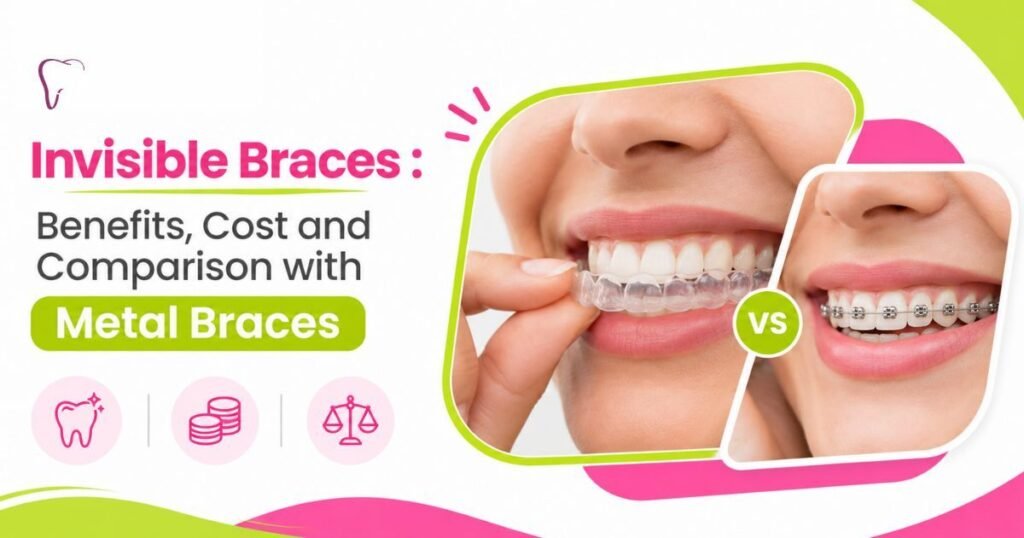
Plenty of adults want straighter teeth but keep putting treatment off. The reason is usually simple: nobody wants a mouth full of metal at work or in wedding photos. That’s why so many people now ask about invisible braces.
Invisible Braces: What You're Actually Getting
When people search for invisible braces, they usually mean clear aligners. These are thin, transparent trays made from a digital scan of your teeth. You wear each set for a week or two, and every new set moves your teeth a small step closer to the planned position.
The name is a little misleading, though. Aligners are hard to spot, not truly invisible. They’re also different from ceramic braces, which still use brackets and wires, just in a tooth colour. Knowing the difference helps you compare quotes fairly.
Why So Many Adults Are Choosing Clear Aligners
Looks are the obvious draw. You can sit through a client meeting or a family function without anyone noticing your treatment.
But the practical benefits of invisible braces matter just as much. Because the trays come out, you can eat what you like and brush and floss as normal. There are no brackets trapping food, no wires rubbing your cheeks and nothing to snap off on a hard snack.
Research supports the comfort side too. A 2023 systematic review in the International Journal of Environmental Research and Public Health found that clear aligners affected patients’ oral health-related quality of life less than fixed metal braces did. The authors noted that the evidence base is still small.
Invisible Braces vs Metal Braces: Which One Suits You?
Aligners aren’t right for everyone. The invisible braces vs metal braces decision depends on the correction your teeth need and how disciplined you are.
Clear aligners | Metal braces | |
Visibility | Hard to notice | Clearly visible |
Eating | Remove trays and eat freely | Avoid hard and sticky foods |
Cleaning | Brush and floss as usual | Extra care around brackets |
Daily effort | Wear 20 to 22 hours a day | Fixed, so no effort to wear |
Best for | Mild to moderate crowding and gaps | Severe crowding and complex bites |
The catch with aligners is commitment. If the trays sit in a drawer, your teeth won’t move. Metal braces work around the clock whether you remember them or not. They also give orthodontists more control over severe crowding, large rotations and deep bites. Whichever you choose, you’ll need a retainer afterwards to hold the result.
What Shapes the Invisible Braces Cost
There’s no single price, because no two mouths need the same amount of movement. The invisible braces cost for someone closing one small gap will be very different from someone correcting crowding on both jaws. The main factors are:
- How complex your case is
- How many aligner sets you need
- Whether extra refinement trays are needed midway
- The aligner system used
- Retainers once treatment ends
In most cases, aligners cost more than metal braces. Ask for a full written breakdown that includes retainers and review visits, so there are no surprises later.
Before You Choose, Get Your Bite Checked
A good result starts with an honest assessment, not a sales pitch. In Bhopal, at Confi Dental Smile Clinic, Dr. Kunaal Agrawal examines your bite and tells you plainly whether aligners or braces will serve you better.
Weighing up invisible braces? Book a consultation and get answers about your own teeth, not a generic brochure.
FAQs
1. Do invisible braces hurt?
Most patients feel some pressure for a day or two after switching to a new set of aligners. It’s a dull tightness rather than sharp pain, and it fades quickly. The smooth plastic edges also mean no wires scratching your cheeks
2. How long does aligner treatment take?
It depends on how far your teeth need to move. Minor spacing can be corrected in a few months, while crowding on both jaws takes longer. Wearing your trays for the full recommended hours every day keeps treatment on schedule.
3. Why does the invisible braces cost vary so much?
The invisible braces cost depends on your case complexity, the number of aligner sets and the system used. Only a proper examination can give you an accurate figure. Make sure any quote includes refinements, retainers and follow-up visits.
4. Can I eat with my aligners in?
No. Take your aligners out for meals and for any drink other than plain water. Brush your teeth before putting them back in, otherwise food and sugar stay trapped against your teeth for hours, which raises your risk of decay.
5. Who is a good candidate for clear aligners?
Many people looking for invisible braces have mild to moderate crowding, gaps or bite problems. Good candidates are teens and adults who will wear their trays 20 to 22 hours daily. Dr. Kunaal Agrawal confirms suitability after an examination.