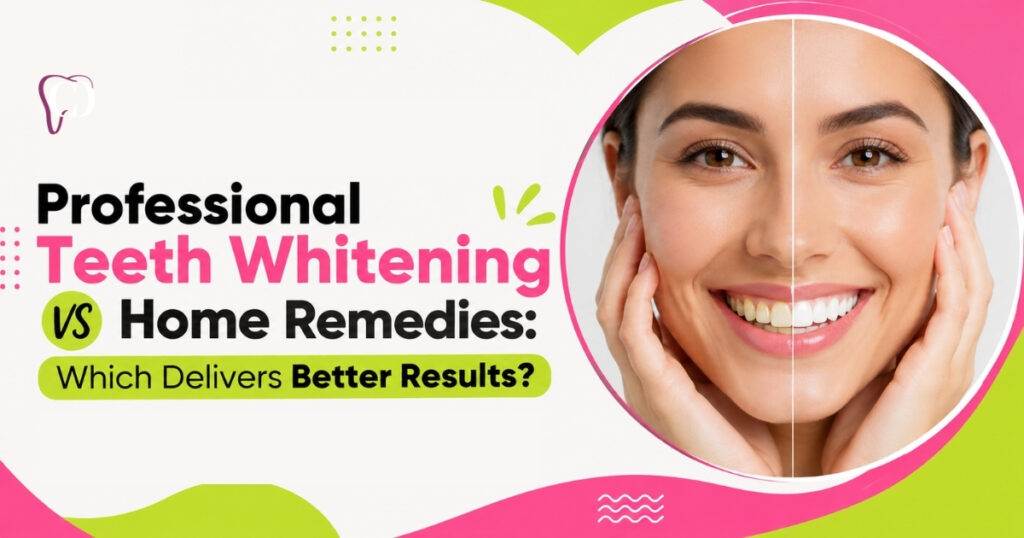
A bright smile can make you feel more confident, but teeth often lose their natural brightness over time. Tea, coffee, tobacco, certain foods and poor oral hygiene can leave behind stains and discolouration. Many people try kitchen remedies to improve their smile, while others choose professional teeth whitening for faster and more controlled results. So, which option actually works better?
What Is Professional Teeth Whitening?
Professional teeth whitening is a cosmetic dental procedure designed to lighten tooth colour and reduce stains. A dentist can assess your teeth first and recommend a suitable approach based on your dental condition.
Unlike random home remedies, professional teeth whitening uses controlled whitening products and a planned process. This helps target surface and deeper stains more effectively. At Confi Dental Smile Clinic, teeth cleaning and whitening is offered as part of its cosmetic dentistry services, alongside treatments such as veneers and aesthetic corrections.
Do Home Remedies Really Whiten Teeth?
Home remedies often include baking soda, lemon, salt, charcoal or other household ingredients. While some may make teeth appear cleaner for a short time, they do not offer the same controlled results as professional teeth whitening.
Some acidic or abrasive ingredients can also damage enamel when used incorrectly. Once enamel wears down, it cannot simply grow back. That is why dentists generally recommend choosing safe, evidence-based options rather than experimenting with harsh ingredients.
Professional Teeth Whitening vs Home Remedies
The biggest difference between professional teeth whitening and home remedies is control. A dentist can identify the type of staining and determine whether whitening is appropriate. The treatment can then be carried out with suitable products and precautions.
Home remedies provide no such assessment. They may have unpredictable effects and cannot address every type of discolouration. For people looking for visible and more predictable improvement, professional teeth whitening is generally the more dependable choice.
How Teeth Whitening Treatment Works
A teeth whitening treatment uses a whitening agent to break down stains that make teeth look darker. The exact method depends on the patient’s teeth, existing dental work and the type of staining.
Before any teeth whitening treatment, a dental examination can help identify issues such as cavities, gum problems or sensitivity that may need attention first. Professional care also helps ensure that the treatment is suitable for your teeth rather than applying a one-size-fits-all remedy.
Choosing the Best Teeth Whitening Treatment
There is no single best teeth whitening treatment for everyone. The right option depends on the cause of staining, tooth condition, sensitivity and your desired result.
A dentist can examine your smile and explain which teeth whitening treatment may suit you. This is particularly important if you have fillings, crowns, veneers or other dental restorations, as whitening products may not change their colour in the same way as natural teeth.
How to Maintain a Whiter Smile
After professional teeth whitening, your everyday habits can affect how long the results last.
Try to:
- Brush twice daily with a fluoride toothpaste.
- Clean between your teeth regularly.
- Limit frequent tea, coffee and staining foods.
- Avoid tobacco products.
- Visit your dentist for routine check-ups and cleaning.
- Follow your dentist’s advice after whitening.
Good oral hygiene can help keep your smile looking clean and healthy.
Why Professional Care Is Worth Considering
Professional teeth whitening does more than focus on appearance. A dental consultation can also identify problems that may contribute to discolouration.
At Confi Dental Smile Clinic, personalised dental care and modern technology form part of its approach to treatment. The clinic also provides teeth cleaning and whitening to remove plaque, stains and discolouration. If you want a brighter smile, professional guidance can help you choose a safe option instead of relying on untested home mixtures.
Conclusion
Home remedies may seem convenient and inexpensive, but they cannot match the controlled approach of professional teeth whitening. A dentist can assess your teeth, identify the cause of staining and recommend an appropriate teeth whitening treatment. For those searching for the best teeth whitening treatment, professional advice is a sensible starting point. Confi Dental Smile Clinic by Dr Kunal Agarwal provides teeth cleaning and whitening as part of its cosmetic dental services, helping patients work towards a cleaner, brighter and more confident smile.
FAQs
1. Is professional teeth whitening safer than home remedies?
Yes, professional teeth whitening is performed with dental guidance and suitable whitening products. A dentist can check your teeth and gums before treatment, reducing the risks associated with inappropriate products or harsh home remedies.
2. How long does a teeth whitening treatment take?
The duration of a teeth whitening treatment depends on the method used and the condition of your teeth. Your dentist can explain the expected treatment time and whether you need additional sessions for your desired result.
3. What is the best teeth whitening treatment for sensitive teeth?
The best teeth whitening treatment depends on the cause and level of sensitivity. A dentist can assess your teeth and recommend a suitable approach. Treating existing cavities or gum problems may also be necessary before whitening.
4. Can home remedies permanently whiten teeth?
Home remedies cannot guarantee lasting whitening. Some ingredients may temporarily remove surface stains, while others can damage enamel when overused. Professional teeth whitening offers a more controlled approach and can be combined with good oral hygiene for longer-lasting results.
5. Can professional teeth whitening remove all stains?
Professional teeth whitening can reduce many types of natural tooth staining, but results depend on the cause and severity. Some stains may respond poorly to whitening and could require another cosmetic option, which your dentist can discuss after examination.