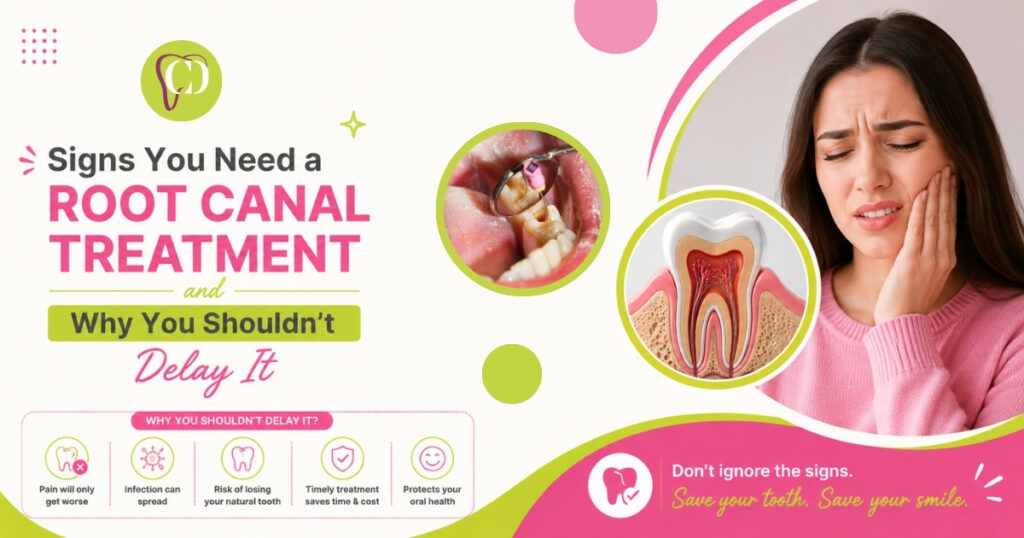
Tooth pain is easy to brush off, especially when it comes and goes. But when discomfort sticks around, it’s often a sign of infection buried deep inside the tooth — and that needs proper attention. A timely Root Canal Treatment clears the infection, takes away the pain, and saves your natural tooth. Modern root canal procedures are far more comfortable than most people assume, and genuinely safe. Catching the warning signs early keeps things simple, reduces treatment complexity, and protects your oral health down the line.
When Do You Actually Need Root Canal Treatment?
Root Canal Treatment becomes necessary once the pulp inside a tooth gets infected or inflamed — usually from deep decay, repeated dental work, trauma, or cracks. Catching the infection early gives you the best shot at saving the natural tooth, easing the pain, and stopping it from spreading further.
Signs You Might Need a Root Canal
Not every infected tooth screams pain right away. Still, there are symptoms you really shouldn’t ignore.
Watch for things like:
- A persistent toothache
- Sharp pain when chewing
- Sensitivity to hot or cold that just won’t fade
- Swollen or tender gums
- A small, pimple-like bump on the gums
- Discolouration of the tooth
- The affected tooth feeling loose
Notice any of these? Book a dental check-up sooner rather than later.
What Actually Causes Tooth Pulp Infection?
The pulp holds nerves, blood vessels and connective tissue that keep a tooth alive and healthy as it develops. Once bacteria work their way into that inner layer, infection follows.
Common culprits include:
- Deep cavities left untreated
- Cracked or fractured teeth
- Serious dental trauma
- Repeated restorative work on the same tooth
- Old fillings that have started leaking
Catching this early makes a real difference to your odds of keeping the natural tooth.
Why Putting Off Treatment Only Makes Things Worse
A lot of people wait once the pain starts fading, assuming it’s healing on its own. Often, though, that’s actually a sign the nerve has been badly damaged.
Waiting too long can lead to:
- A dental abscess forming
- Bone loss around the tooth root
- Infection spreading further
- More pain and swelling
- A higher chance you’ll need extraction
Acting early usually means a smoother, more predictable outcome — and a better shot at keeping your natural smile intact.
What Actually Happens During the Procedure?
Root canal treatment today relies on advanced techniques and local anaesthesia to keep patients comfortable throughout.
Generally, the process involves:
- Examining the affected tooth
- Taking digital X-rays
- Removing the infected pulp tissue
- Cleaning and disinfecting the canals thoroughly
- Filling and sealing everything back up
- Restoring the tooth with a filling or crown, when needed
Most patients are back to their normal routine not long after.
Picking the Right Dental Specialist
Getting this right depends on accurate diagnosis, real clinical skill, and attention to detail.
When you’re choosing a dentist, look at:
- Their experience with root canal procedures
- Whether they use modern diagnostic equipment
- Sterile clinical protocols
- A treatment plan built around you
- What previous patients actually say
If you’re searching for the best root canal specialist in Bhopal, look for someone experienced who prioritises evidence-based care and treatment plans tailored to you.
The best root canal specialists blend advanced technique with a genuinely patient-centred approach — that’s what gets reliable results.
Looking After Your Tooth Afterwards
Sticking to your dentist’s advice supports proper healing and keeps things working long-term.
Helpful aftercare habits include:
- Keeping up good oral hygiene
- Steering clear of hard foods until the final restoration goes in
- Turning up to your follow-up visits
- Wearing a night guard if you grind your teeth
- Regular check-ups with your dentist
Key Takeaways
Ignoring persistent tooth pain tends to lead somewhere worse — and raises the risk of losing the tooth altogether. Getting Root Canal Treatment at the first signs of infection clears out the bacteria, eases the discomfort, and protects your oral health. With today’s techniques, it’s a safe, efficient, highly successful procedure. Led by Dr Kunaal Agrawal, Confi Dental Smile Clinic offers comprehensive endodontic care with modern technology and treatment plans built around you, helping patients get back to healthy, confident smiles.
FAQs
1. Is Root Canal Treatment painful?
Modern Root Canal Treatment uses local anaesthesia, so most patients find it comfortable. You might feel mild tenderness for a day or two afterwards, but it’s usually manageable with medication, and you’ll be back to normal activities quickly.
2. How do I know if I need a root canal instead of a filling?
Your dentist checks the extent of decay through examination and digital X-rays. If the infection’s reached the pulp, a filling alone won’t cut it — root canal treatment becomes the only way to save the natural tooth.
3. How do I find the best root canal specialist in Bhopal?
Look at experience, use of advanced diagnostic tech, patient reviews and treatment approach when searching for the best root canal specialist in Bhopal. A qualified professional means better accuracy, more comfort, and stronger odds of keeping your natural tooth long-term.
4. How long does a treated tooth last after a root canal?
With proper care, a treated tooth can last for years — often a lifetime. Good oral hygiene, regular dental check-ups, and a crown where recommended all play a part in keeping the restored tooth durable and functional.
5. Why is choosing experienced best root canal specialists important?
The best root canal specialists know how to diagnose tricky cases accurately, clean the canal system thoroughly, and restore the tooth properly. That expertise, paired with modern techniques and solid follow-up care, means fewer complications down the road.