If you’ve ever had traditional dental impressions done, you probably remember the uncomfortable trays, messy mould material, and long wait while everything set properly. Thankfully, dentistry has moved forward quite a bit. That’s where Digital Intraoral Scanning comes in.
Modern dental clinics are now using digital technology to make treatments faster, more accurate, and much more comfortable for patients. Instead of using old-fashioned impression moulds, dentists can create detailed digital images of your teeth and gums within minutes.
Whether it’s for aligners, crowns, veneers, implants, or cosmetic dentistry, digital scanning has become one of the most useful tools in modern dental care.
How Digital Intraoral Scanning Makes Dental Visits Easier
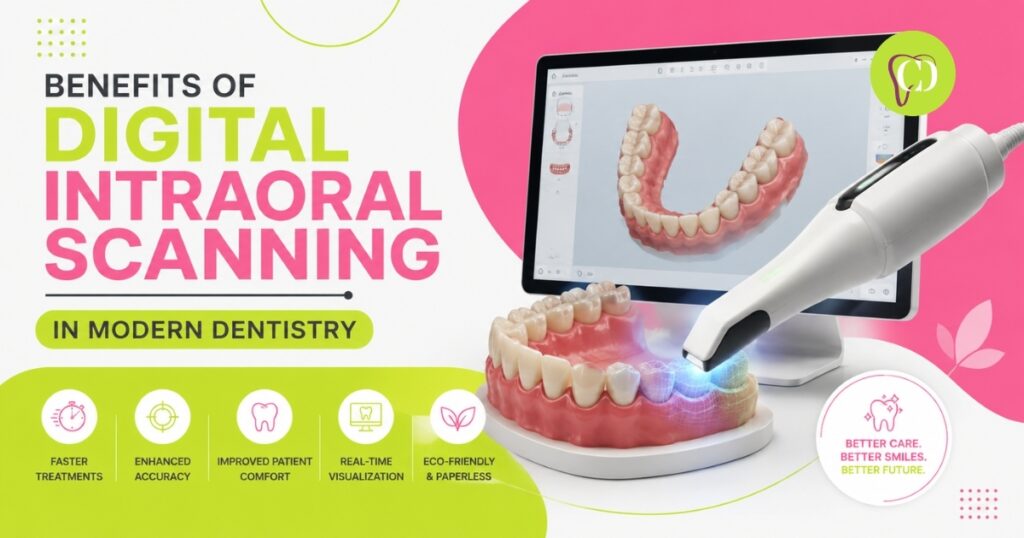
Digital Intraoral Scanning creates highly accurate 3D images of the mouth using advanced scanning technology. It improves patient comfort, reduces impression errors, speeds up treatment planning, and helps dentists create better-fitting restorations and orthodontic solutions with greater precision.
A Much More Comfortable Experience
Let’s be honest – traditional impressions were never enjoyable. The thick moulding material often felt awkward and uncomfortable, especially for patients with a sensitive gag reflex.
A modern intraoral scanner changes that experience completely. Instead of messy impression trays, the dentist simply moves a small handheld scanner around your mouth to capture detailed digital images.
The process is quicker, cleaner, and far less stressful for most people. Many patients are surprised by how simple it feels compared to older impression methods. This is especially helpful for children, nervous patients, or anyone who dislikes lengthy dental procedures.
Better Accuracy Means Better Dental Results
One of the biggest reasons dentists prefer digital scanning is accuracy. Traditional impressions can sometimes distort slightly during the moulding process, which may affect how crowns, veneers, or aligners fit later.
With 3d dental scanning, dentists receive highly detailed digital models almost instantly. These scans allow for better treatment planning and more precise restorations.
Small details matter a lot in dentistry. Even tiny inaccuracies can lead to discomfort or extra adjustment appointments later. Digital scans help reduce those issues by giving dentists clearer and more reliable images from the start. Patients benefit too because treatments often feel smoother and more predictable overall.
Faster Treatment Planning and Modern Workflow
Digital scanning also helps speed up the entire treatment process. Once the scan is complete, the files can be shared directly with dental laboratories or treatment software almost immediately.
A modern dental scanner removes the need to physically ship impression moulds, which saves time and improves efficiency for both clinics and patients.
Many dental clinics now use advanced systems like the iTero dental scanner for orthodontic and clear aligner treatments. One reason patients like this technology is because dentists can often show digital treatment previews during consultations.
Seeing how teeth may shift over time helps patients understand the treatment process more clearly and feel more confident about moving forward. The technology also allows dentists to keep digital records safely stored for future reference, making follow-up treatments easier and more consistent.
Why Digital Dentistry Keeps Growing
Digital dentistry continues to grow because it improves the overall patient experience while helping dentists work more accurately and efficiently. Patients today want dental visits to feel simpler, quicker, and less uncomfortable. Digital scanning supports all of that. It reduces chair time, improves communication, and helps create restorations that fit more naturally.
For dentists, it also creates a smoother workflow and allows better collaboration with dental laboratories. In many ways, digital scanning has made modern dentistry feel more patient-friendly than ever before.
Final Thoughts
At the end of the day, dental technology should make treatment easier for both patients and dentists. Digital Intraoral Scanning does exactly that by replacing uncomfortable traditional impressions with a faster, cleaner, and far more accurate process.
From better-fitting restorations to improved patient comfort, digital scanning has become an important part of modern dental care. Clinics like Confi Dental Smile Clinic continue to use advanced dental technology to provide patients with more comfortable, precise, and efficient treatment experiences.
FAQs
1. What is digital intraoral scanning used for?
Digital Intraoral Scanning is commonly used for crowns, veneers, aligners, implants, bridges, and cosmetic dental treatments. It creates detailed digital impressions of the teeth and gums, helping dentists plan treatments more accurately while improving patient comfort compared to traditional mould impression methods.
2. Is an intraoral scanner more comfortable than traditional impressions?
Yes, an intraoral scanner is generally much more comfortable because it removes the need for messy mould materials and bulky impression trays. Most patients find the scanning process quicker, cleaner, and easier, especially those with sensitive gag reflexes or anxiety during dental procedures.
3. How accurate is 3D dental scanning?
Modern 3d dental scanning technology is highly accurate and allows dentists to create precise digital models for restorative and orthodontic treatments. These detailed scans help improve the fit of crowns, aligners, veneers, and implants while reducing the chances of impression-related errors during treatment planning.
4. What are the benefits of using a dental scanner?
A dental scanner improves treatment accuracy, speeds up workflow, reduces manual impression errors, and enhances patient comfort. It also allows dentists to store digital records, communicate more efficiently with dental labs, and provide better-fitting restorations using modern digital dentistry technology.
5. Why do many dentists use the iTero dental scanner?
The iTero dental scanner is popular because it provides fast, highly detailed digital scans and works well for clear aligner and orthodontic treatments. Many dentists also use it to show patients digital treatment simulations, helping them better understand expected treatment results before starting procedures.